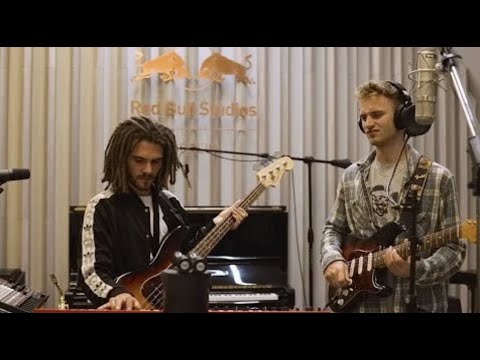
FKJ & Tom Misch - Losing My Way guitar chords
Auto-generated chord chart from YouTube analysis
About Tutti
Tutti is a free tool that analyzes a YouTube link or audio/video file to detect the key, tempo (BPM), time signature and chord progression, then builds guitar chord charts and TAB. Results are shown with a playback cursor so you can play along.
A chord progression lists the chords in the order they change. At each chord name (e.g. G, Em, C), fret that chord and strum in time.
Guitar chord chart for FKJ & Tom Misch - Losing My Way. Tutti analyzed the YouTube audio to extract key G# Minor, 100 BPM. a progression of 16 chords. Check the progression, each chord's notes and practice tips, then play along with the cursor in the Tutti app.
Song notes
“FKJ & Tom Misch - Losing My Way” runs at 100 BPM in 4/4, in G# Minor. The chart spans 104 bars and uses 16 distinct chords, changing roughly every 3.5 seconds.
Part A, the most repeated section, loops B6 → G#m6 → G#m6 → G#m6 → Emaj7 → Emaj7 → E → Emaj7 — III–i–VI–VI–VI in scale degrees.
11 of the chords need a barre (B, B6, C#, C#7, C#m, D#m7, F#, G#7, G#m, G#m6, G#m7), so this sits at a upper-int. level.
With a capo on fret 4 you can play it with F · Fm7 · G · G6 · G# · A … shapes instead — 11 of 16 become open chords.
Start around 70 BPM with a metronome and work up to 100.
Tempo drifts by about ±8.4 BPM — steady enough to practise to a click.
Dynamic range is 33 dB — a wide swing, with 38% of the song played quietly.
The first chord lands at 9s, so there is a short intro before you come in.
Balance of the mix: Bass 39%, Drums 23%, Guitar 13%.
The vocal sits between G♯2 and A5 (centred on B3), which helps if you are picking a key to sing in.
Song structure
| Part | Starts | Bars | Plays | Progression |
|---|---|---|---|---|
| Part A | 0:00 | 1–8 | 1 | B → B6 → B6 → B6 → B6 → B6 |
| Part B ★ | 0:21 | 9–16 | 5 | B6 → G#m6 → G#m6 → G#m6 → Emaj7 → Emaj7 → E → Emaj7 |
| Part C | 0:32 | 17–40 | 4 | G#m → G#m → G#m6 → G#m6 → G#m6 → G#m → E → G#m |
| Part B ★ | 1:30 | 41–56 | 5 | G#m → G#m → G#m6 → G#m6 → E → E → G#m → G#m6 |
| Part D | 1:57 | 57–64 | 1 | G#m7 → G#m7 → C#7 → G#m6 → G#m6 → G#m6 → C#7 → Emaj7 |
| Part C | 2:16 | 65–72 | 4 | G#m7 → G#m7 → G#m6 → G#m6 → G#m → G#m → Emaj7 → G#m |
| Part B ★ | 2:36 | 73–88 | 5 | G#m7 → G#m7 → G#m6 → G#m6 → Emaj7 → Emaj7 → G#m6 → G#m7 |
| Part E | 3:14 | 89–96 | 1 | F# → F# → A → E → G#m → G#7 → C#m → G#m7 |
| Part F | 3:33 | 97–104 | 1 | D#m7 → G#m7 → G#m7 → E → C# → F# → G#m → B |
★ most repeated — likely the chorus
Practice tips
- Around 100 BPM. Practice to a metronome for steady timing.
- 16 chords are used. Loop the sections where chords change quickly.
- This song is in G# Minor; practicing other songs in the same key builds your chord sense.
Chords used & their notes (fingering reference)
The Roman numeral on each chord shows its function relative to the key, revealing the harmonic flow.
Chord progression